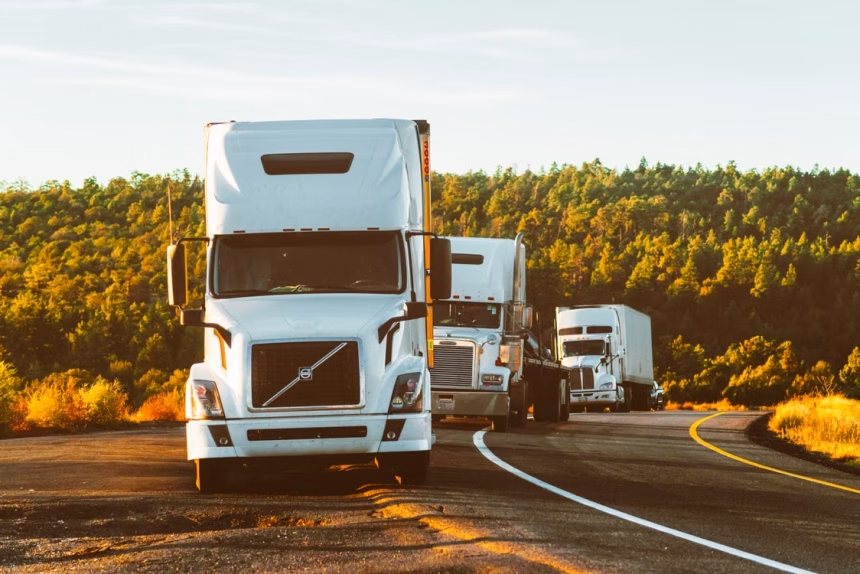
A jackknife accident happens when a truck’s trailer swings out to the side, forming a sharp angle with the cab — resembling a folding pocketknife, which is where the name comes from. These crashes are among the most dangerous on the highway, often blocking multiple lanes and pulling other vehicles into a chain-reaction collision. If you’ve been affected by one, a jackknife truck accident lawyer who understands what causes these crashes can make a real difference in how your claim is built.
What Causes a Truck to Jackknife
A jackknife occurs when the trailer loses traction and swings out relative to the cab, typically triggered by:
- Sudden or hard braking, especially at highway speeds, which can cause the trailer’s wheels to lock up and lose traction before the cab’s wheels do
- Wet, icy, or slick road conditions, which reduce traction and make sudden maneuvers far more dangerous
- Speeding, particularly around curves or in poor weather, reducing the driver’s margin for error
- Improperly loaded or unevenly distributed cargo, which affects the trailer’s balance and how it responds to braking or turning
- Driver inexperience, since properly reacting to a developing skid requires specific training that inexperienced drivers may lack
- Mechanical issues, including brake imbalance between the cab and trailer, which can cause uneven braking force across the vehicle
Why Jackknife Accidents Are So Dangerous
Once a trailer begins to jackknife, the driver often has very limited ability to regain control, and the resulting crash pattern tends to be especially hazardous:
- The trailer can block multiple lanes of traffic, creating a serious hazard for following vehicles that may not have time to stop or swerve in time
- Following vehicles can collide with the trailer itself, sometimes triggering a multi-vehicle pileup involving several cars
- The truck may tip over entirely, particularly if it’s carrying a high or unevenly distributed load at the time it begins to skid
- Cargo can spill onto the roadway, creating additional hazards for vehicles arriving on the scene afterward
Because of these compounding risks, jackknife accidents frequently result in multi-vehicle collisions rather than a single point of impact, which can complicate the process of determining exactly what happened and who bears responsibility for each part of the resulting crash.
Who Can Be Held Liable in a Jackknife Accident
The driver. Jackknife accidents often involve driver error — excessive speed for conditions, hard braking, or improper reaction to a developing skid. A driver’s specific actions leading up to the jackknife are central to determining liability.
The trucking company. If the company failed to properly train the driver on skid recovery and braking technique, pressured the driver to maintain an unsafe schedule in poor weather, or failed to maintain the vehicle’s brakes properly, the company can share liability alongside or instead of the driver.
A cargo loading company. Improperly loaded or secured cargo is a common contributing factor in jackknife accidents, and the company responsible for loading — which may be a separate business from the trucking company itself — can be held liable if negligent loading contributed to the crash.
A maintenance contractor or parts manufacturer. If uneven or malfunctioning brakes contributed to the jackknife, liability may extend to whoever performed recent maintenance or, in cases involving a defective part, to the manufacturer of that component.
How Jackknife Accidents Are Investigated
Because these crashes often result from a specific chain of events, an attorney investigating a jackknife accident typically examines:
- The truck’s electronic logging device (ELD) data, showing speed and braking leading up to the crash
- Weather and road conditions at the time of the accident
- The truck’s maintenance records, particularly for the braking system
- Cargo weight and loading documentation
- Witness statements and, in serious cases, an accident reconstruction expert’s analysis of skid marks and vehicle positioning at the scene
Injuries Commonly Associated with Jackknife Accidents
Given the multi-vehicle nature of many jackknife crashes, injuries can be severe and can affect multiple vehicles and their occupants at once, including traumatic brain injuries, spinal cord injuries, crush injuries (particularly for vehicles that collide directly with the trailer), multiple fractures, and, in the most severe cases, fatalities.
Building a Jackknife Accident Claim
- Evidence preservation, requesting ELD data, maintenance records, and any available dashcam footage before it can be lost.
- Weather and road condition investigation, to establish whether conditions were a contributing factor and whether the driver’s speed was appropriate for those conditions.
- Liability analysis, given the number of parties that can potentially share responsibility in a cargo-loading or maintenance-related jackknife.
- Damage calculation, accounting for the full scope of injuries and losses across everyone affected.
- Negotiation and, if necessary, litigation, particularly important in multi-vehicle jackknife cases where liability may be disputed among several parties at once.
What Compensation May Be Available
A jackknife truck accident claim can potentially cover medical expenses (both current and future), lost wages and reduced earning capacity, property damage, pain and suffering, and wrongful death damages in fatal cases.
Getting Help After a Jackknife Accident
Jackknife accidents often involve complex, multi-vehicle circumstances and multiple potentially liable parties, making experienced legal representation especially valuable. An attorney can investigate the specific cause — whether it was driver error, cargo loading, weather, or a mechanical issue — and pursue compensation accordingly. Most jackknife truck accident lawyers offer a free consultation and work on a contingency fee basis, meaning there’s no upfront cost and no fee unless they win your case.